

By Henry R. Moncur III | ATCU Communication
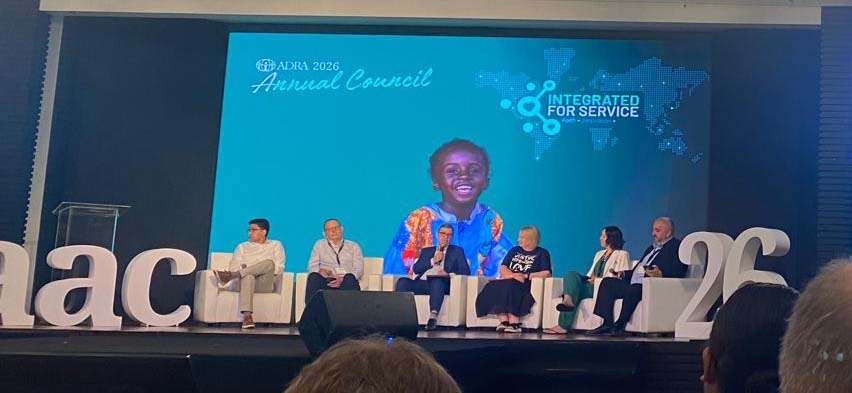
Leaders from across the global network of the Adventist Development and Relief Agency (ADRA) convened in Chiang Mai, Thailand from March 3 to 8, 2026, for the agency’s ADRA Annual Council (AAC), an important strategic gathering focused on strengthening humanitarian collaboration, innovation, governance, and mission effectiveness.
The council brought together regional directors, country office leaders, technical specialists, and institutional partners to review program outcomes, align global priorities, and develop coordinated responses to emerging humanitarian challenges. Participants engaged in plenary sessions, workshops, and regional consultations addressing ADRA’s new licensing and accreditation framework, sustainable development, financing for development, and office localization, and the rollout of the reimagining the network model.
In addition, each day featured an innovation and technology showcase, highlighting solutions from the ADRA Source Technology Hub a suite of digital tools available to field offices to advance program delivery, improve monitoring systems, strengthen data-driven decision-making, and expand operational impact. The council also served as a platform to share best practices for community-based transformation initiatives.
Working Together
In his opening remarks, Paulo Lopes, ADRA International president, emphasized the urgency of collaborative mission delivery in an increasingly complex humanitarian environment. “We can’t survive working in isolation. Collaboration is a must. Integration is a must. Unity is a must. We can’t be competing. We must be willing to give away power and put together our resources for the good of the mission.”
Thailand was selected as the host location due to its strategic significance in ADRA’s regional structure and its long-standing role as a hub for program coordination across Asia. The global humanitarian organization operates in 118 countries, providing development assistance and emergency response services to vulnerable populations regardless of faith or background.
Strategic Implications for the Atlantic Caribbean Region
For the Atlantic Caribbean Union (ATCU), participation in the AAC ‘26 was significant, as it provided exposure to emerging operational models and strategic frameworks that can be contextualized for regional development initiatives.
Henry Moncur III, ATCU ADRA director, underscored the transformative importance of the gathering. “This council was not only about strengthening global alignment; it helped us identify a practical model for development that can shape the future of ADRA’s work across the ATCU. The insights gained will enable us to design more integrated church community-driven programs that are sustainable, collaborative, and responsive to the unique realities of our region. It positions us to move from fragmented interventions to a more holistic development approach that advances both mission impact and institutional resilience.”
He noted that the council provided critical insights into emerging funding trends, disaster-response coordination models, and integrated development strategies that will directly influence program implementation across ATCU.
Strengthening Mission Impact
The 2026 AAC concluded with renewed commitments to collaborative mission delivery, institutional strengthening, and the reimagined ADRA network. Country offices departed with action plans focused on improving operational efficiency, expanding strategic partnerships, and leveraging technology to enhance humanitarian outcomes.
As ADRA continues to respond to global challenges such as climate vulnerability, economic instability, and humanitarian crises, the council reaffirmed the organization’s shared commitment to service rooted in compassion, justice, innovation, and sustainable development.
About ATCU
The ATCU, headquartered in Nassau, New Providence, The Bahamas, comprises 27,694 members across four fields: the Cayman Islands Conference, the North Bahamas Conference, the South Bahamas Conference, and the Turks and Caicos Islands Conference. Additionally, Northern Caribbean University in Mandeville, Jamaica, is co-owned and operated by both ATCU and the Jamaica Union.